One of the biggest misconceptions about innovation is that innovation is usually synonym for radical change. In reality, while every firm wants to differentiate itself in today’s crowded marketplaces, most companies are reluctant to introduce revolutionary products to market. The Hewlett-Packard: Flight of Kittyhawk case published on the Harvard Business Review explains why disruptive innovation is so hard. In 1992, HP wanted to grow more rapidly and decided to introduce a cutting-edge disk drive that should have changed the industry. However, the project failed.
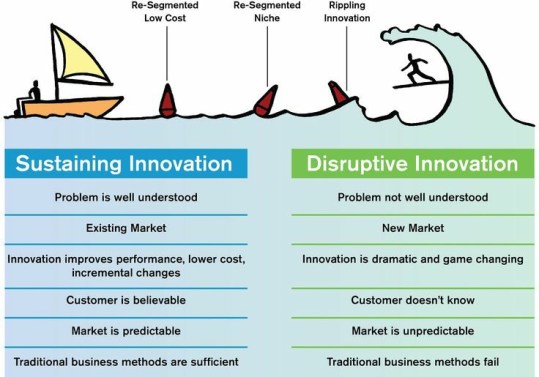
Most people failed to understand the difference between disruptive innovation and incremental innovation. There are two types of technologies that can affect a business: disruptive and sustainable technologies. Sustainable technologies do not usually have a major impact on an organization. They are introduced to help improve a current product or process. Disruptive technologies, on the other hand, are groundbreaking technologies or products that change the way a company does business.

The main issue with disruptive technologies is that they may not find a market when they are initially created; a market must be developed. Additionally, they need time to mature and may see failure before success as it takes time for people to accept them. Accordingly, firms that introduce disruptive technologies should allow sufficient time for a customer base to blossom.
In summary, I used to assume that only big companies could produce breakthrough technologies because they had the financial resources and technological capabilities needed for disruptive technologies. Additionally I thought they could afford to take risks because of their brand recognition and loyal customer base. But I was wrong! In fact, disruptive technologies rarely emerge from big established organizations. Large corporations are designed to be comfortable with sustainable technologies. They know their markets and want to capitalize on the value of that knowledge. They don’t want to be distracted by risky projects. Ironically, firms that can afford to be patient and allow a new product to mature are the ones afraid to take risks.
 Innovassion